Français
 لالعربية
 Português
 Español
Why is the flat pack container house becoming a preferred option in today’s building market? The answer usually starts with efficiency. Many projects now operate under tight timelines and complex logistics, and traditional constructions often struggle to keep up. A flat pack container house offers a more practical approach by simplifying transportation, reducing on-site work, and allowing faster project execution.
So how does a flat pack container house actually improve project speed? The key lies in how it is delivered. Instead of shipping fully assembled units, a flat pack container house is transported as organized components. Walls, frames, and structural elements are packed efficiently, allowing more units to be shipped at once. For international constructions, this makes logistics easier to manage and helps avoid delays caused by limited transport capacity.
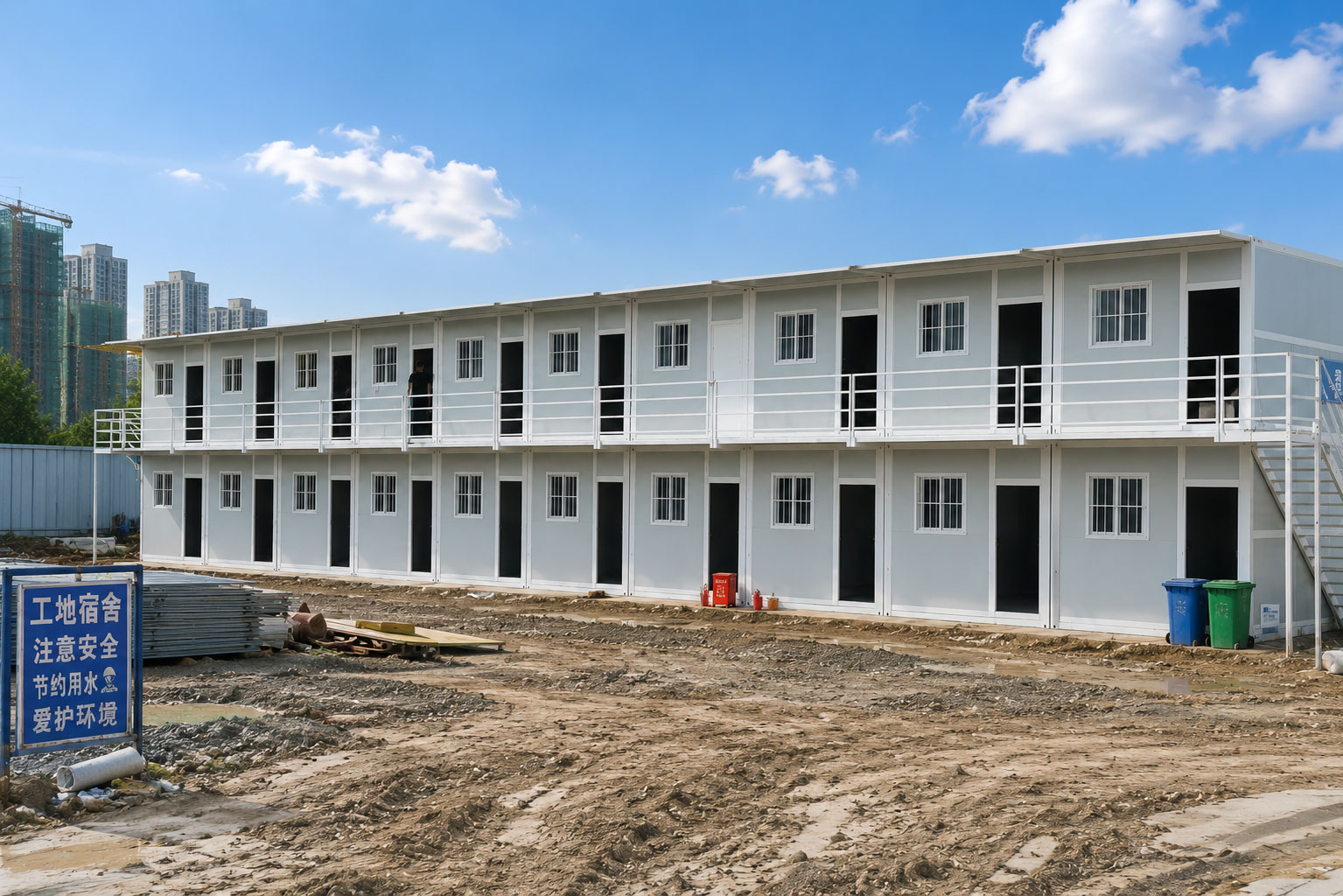
What happens once the materials arrive on site? This is where the flat pack container house shows another advantage. Components are designed for straightforward assembly, meaning installation teams can complete structures quickly without relying on complex processes. Compared with many traditional constructions, where on-site work can take months, a flat pack container house can be ready for use in a much shorter time. This makes it especially suitable for projects that need to move forward without interruption.
Does choosing a flat pack container house mean sacrificing flexibility? Not at all. In fact, flexibility is one of its strongest features. A single flat pack container house can function as living space, workspace, or a support unit. Multiple units can be combined to form larger layouts, including multi-level structures. Whether used for accommodation or as an office container, the system allows adjustments as project needs change.
What about comfort? Can a flat pack container house provide a suitable environment for daily use? Modern designs address this concern directly. A well-designed flat pack container house includes insulation, ventilation, and practical interior layouts. This ensures that the space is comfortable for both living and working. When used as an office container, it supports productivity, and when integrated into a larger setup, it contributes to a functional camp house environment.
Is durability a concern for this type of building? Many people assume that a flat pack container house is only suitable for short-term use, but this is no longer the case. With strong structural materials and protective finishes, a flat pack container house is built to handle different environmental conditions. Whether placed in hot, humid, or variable climates, it maintains stability over time. This makes it a reliable option within modern constructions.
How does a flat pack container house perform in large-scale developments? In reality, it performs exceptionally well. For projects that require multiple buildings, such as worker accommodation or site offices, the modular nature of the flat pack container house allows phased installation. A camp house can be developed step by step, starting with essential units and expanding as needed. This approach provides better control compared with many traditional constructions.
Choosing the right partner is just as important as choosing the right system. So, how can developers ensure consistent quality and smooth delivery? This is where experience makes a difference. Lida Group has been active in modular building and flat pack container house solutions since 1993. With over 5000 completed projects and delivery to 152 countries and regions, Lida Group brings a strong understanding of global project requirements.
What makes Lida Group a reliable choice for a flat pack container house project? One major factor is its one-stop service platform for integrated building. Instead of coordinating multiple suppliers, clients work with a single team that manages design, manufacturing, logistics, and installation support. This reduces complexity and ensures that every flat pack container house fits into a well-organized plan.
How does production capacity affect project success? It plays a crucial role. Lida Group operates six container modular housing production lines and eight steel structure production lines. This allows stable output for both small and large orders. Whether the project requires a few units or a complete camp house, each flat pack container house is produced with consistent standards, something that can be difficult to achieve in traditional constructions.
What about quality assurance? International projects require reliable standards, and this is another area where Lida Group delivers. Its flat pack container house products meet ISO and CE certifications, ensuring suitability for global markets. In addition, more than 60 patents reflect ongoing improvements in design and manufacturing. This continuous development helps ensure that each flat pack container house performs reliably.